The 10 keys to the prosperity of U.S. cities now
10 April 2024
by Chris Fair, President & CEO, Resonance

09 April 2026
by Chris Fair, President & CEO, Resonance Consultancy

The concept of a Tourism Master Plan wasn’t invented in a boardroom or a DMO strategy session. It was born from international development policy.
Beginning in the 1970s, the World Tourism Organization (now UN Tourism) established tourism master planning as a formal technical cooperation instrument, deploying it with national governments across the developing world.
The idea was straightforward: help emerging economies build a tourism sector from scratch by setting national-level strategy, identifying infrastructure needs, targeting source markets, and aligning government investment. Countries across Africa, Asia, and Latin America were the proving grounds.
For decades, the concept lived with federal governments, usually in developing markets, attempting to build tourism as an economic sector at the national level.
In 2013, our team at Resonance applied it somewhere it had never been tried before: a single North American city. Tourism Vancouver, as it was called at the time, became the first DMO on the continent to commission a Tourism Master Plan, and in doing so, fundamentally changed what the instrument could do.
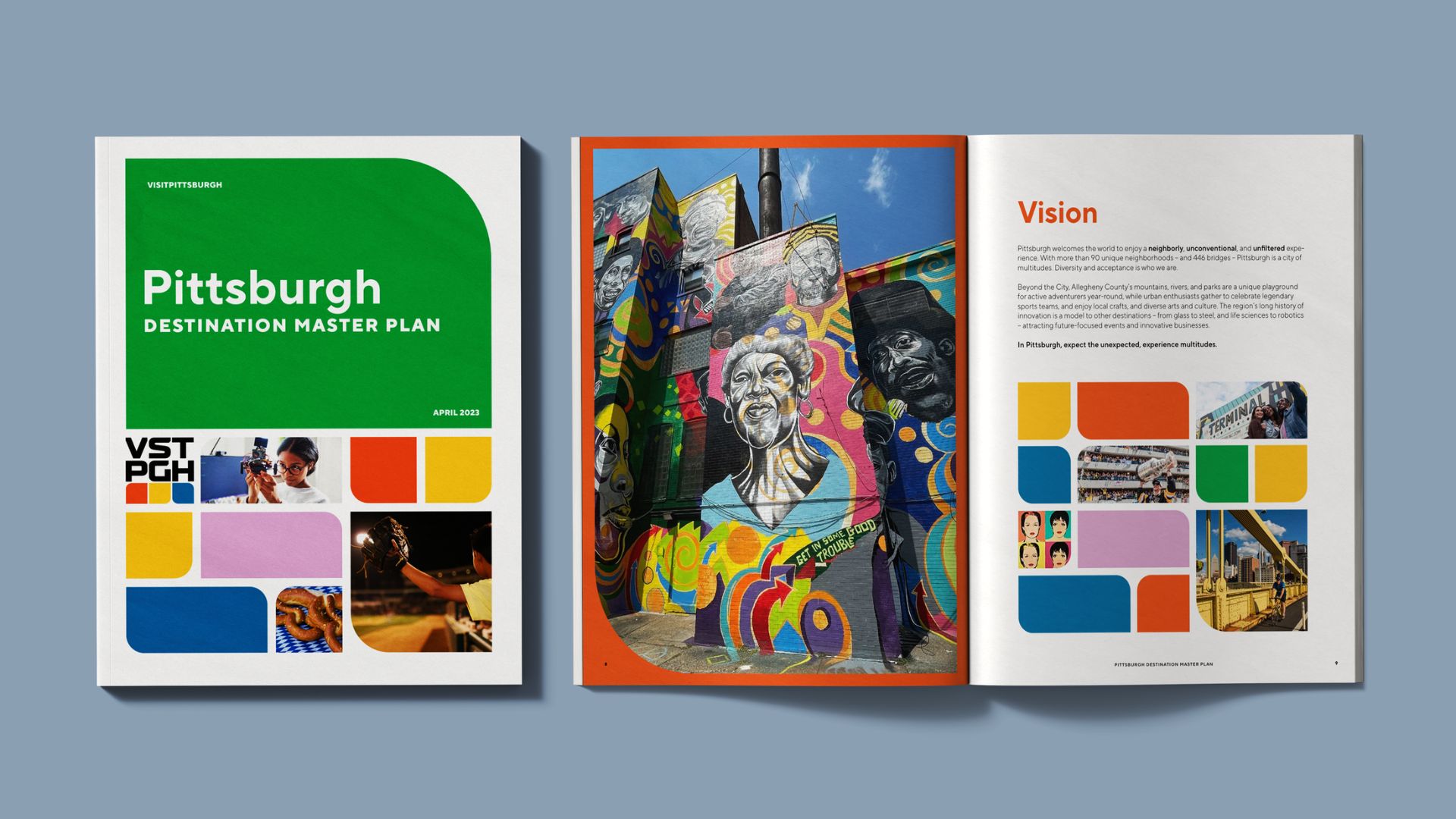
Resonance worked with Visit Pittsburgh to create a Destination Master Plan that combined the urban experience of the famed city with the wild outdoors of Allegheny County.
Nearly 15 years and dozens of engagements later, across destinations ranging from Los Angeles and Houston to Pittsburgh, San Diego, Richmond, Ottawa, Toronto, Christchurch, Portland, Tucson and Scottsdale, Resonance has evolved that first adaptation into something far more consequential than any of us anticipated when we started.
Destination development planning has evolved from a sector-building exercise into a civic growth strategy. And the destinations that understand this distinction are the ones pulling ahead.
From Marketing to Management
The original shift in destination strategy was deceptively simple: the M in DMO needed to stand for management, not just marketing.
For most of the 20th century, destination organizations were built to sell. Their job was to generate demand. More room nights, more arrivals, and more spending was demanded and lauded. Everything else was someone else’s problem. But as destinations grew more competitive and more complex, that model started to crack.
The first city-level Tourism Master Plans were largely about expanding the DMO’s mandate. They formalized what progressive destination leaders already knew: that a DMO manages very few, if any, assets within a destination, and that its real power lies in coalition-building: bringing together government, industry, communities, and investors around a shared direction.
Vancouver’s 2013 plan did exactly that. It created a framework for stakeholder alignment that went far beyond any marketing strategy, identifying product development needs, visitor experience gaps, and infrastructure priorities that no single partner could address alone. It was the beginning of a fundamentally different way of thinking about what a destination organization is responsible for.

From Management to Stewardship
The pandemic accelerated something that had been building for years. In high-demand nature destinations, overtourism had exposed gaps in infrastructure, parking, and wayfinding. In urban centers, the sudden disappearance of visitors revealed how deeply tourism underpins downtown vitality, cultural institutions, and small businesses. In both cases, the lesson was the same: destinations that had grown organically, without a strategic framework, were the most vulnerable.
At the same time, residents began asking harder questions. Tourism growth used to be an easy political sell, when more visitors meant more jobs, more tax revenue, and more economic cover for the next budget cycle. Today, destination leaders are being asked to prove something more difficult: that tourism growth will strengthen the place that hosts it, not strain it.
That shift gave rise to the concept of “destination stewardship.” Modern tourism master planning is no longer primarily about growth, but more intentional growth – that connection between visitor demand and community priorities, environmental capacity, product development, and governance over a five-to-10-year horizon. The strongest plans today sit above the marketing plan, the brand platform, and the visitor management strategy. They define where the destination is going, which tradeoffs it’s willing to make, and what implementation actually requires.
The strongest plans don’t just produce a document. They produce a better decision-making framework.
From Stewardship to Development
The next evolution is already underway, and it’s the most consequential one yet.
Stewardship, which essentially means protecting what a destination has, is necessary but not sufficient. The destinations that will outperform over the next decade are the ones actively developing their future: identifying the experiences, infrastructure, and investment they need to meet or attract the demand they want, and then doing the work to make it happen.
That means destination organizations are increasingly functioning like economic development bodies, not just promotional ones. They are identifying product gaps and advocating for investment to fill them. They are making the case for air connectivity, hotel development, transit improvements, and public realm upgrades to elected officials and private developers. They are building the evidence base (think research, competitive benchmarking and demand signals) that turns ambition into a fundable proposition.
This is a fundamentally different role than the one most DMOs were built for. It requires a different kind of team, a different set of relationships, and a different strategic instrument than a marketing plan or a brand platform can provide. It requires a Destination Master Plan… and an organization with the capacity to implement one.
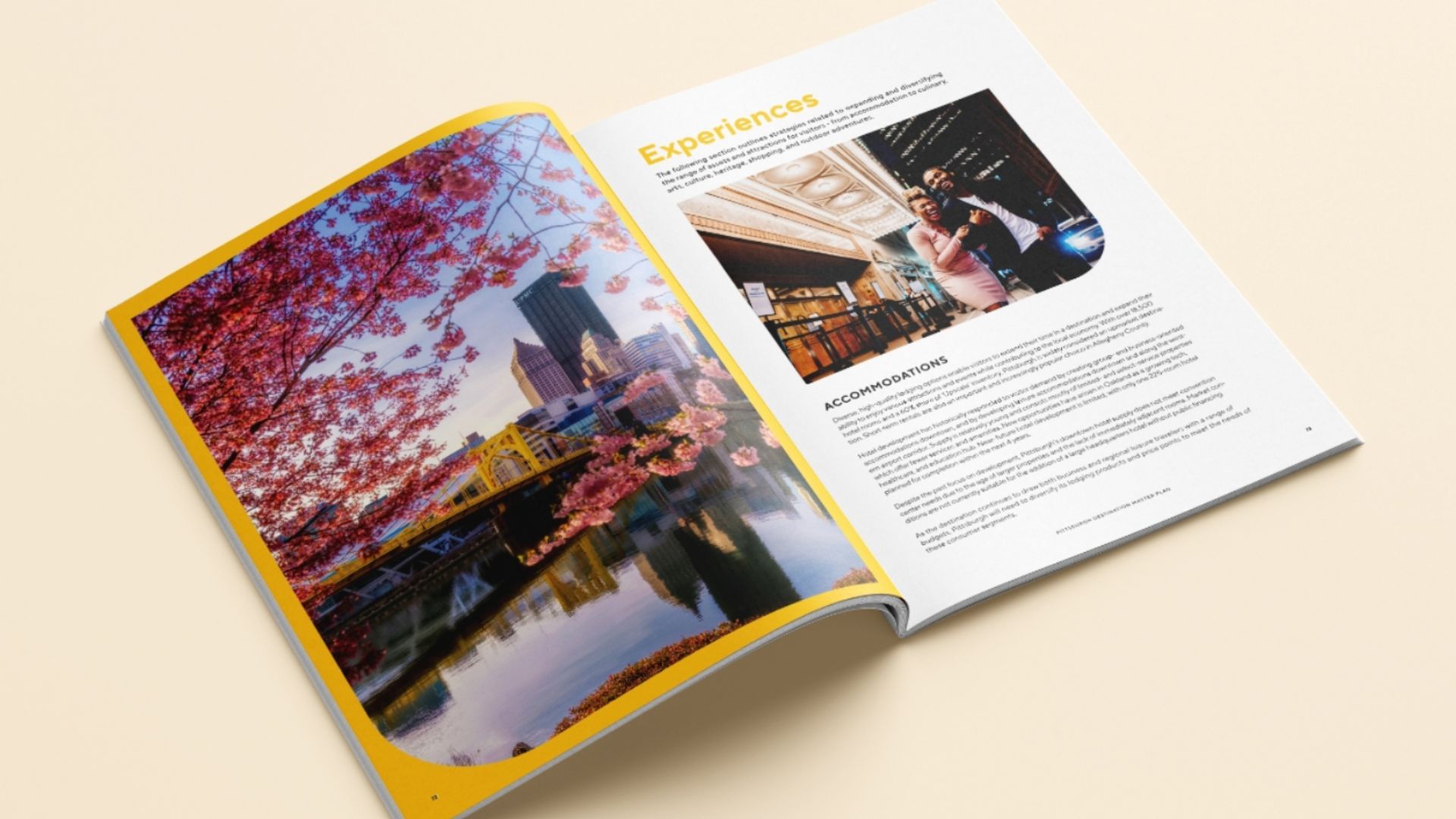
Our 10-year Destination Master Plan elevated more than 90 Pittsburgh neighborhoods and set the groundwork for greater national and international recognition.
What Recent Work Keeps Proving
Across Resonance’s destination development engagements, a consistent pattern holds: the most useful findings are often the ones that challenge the default narrative.
In Ottawa, the commission began with the expectation of a conventional strategic refresh. What the research uncovered was something far more distinctive: Ottawa offered more outdoor activities than any other urban destination in Canada, and more rural experiences than any other.
That insight redirected the five-year strategic plan and the longer-term stewardship framework toward a destination identity – Loving our Terroir, Celebrating Neighborhoods, Living for the Great Outdoors – that Ottawa Tourism could actually build around, not just describe.
In Pittsburgh, the challenge was reconnecting post-COVID tourism strategy to something residents could recognize as beneficial. The resulting 10-year Destination Master Plan elevated more than 90 neighborhoods, embraced the city’s African-American heritage, improved access to surrounding outdoor recreation, and set the groundwork for greater national and international recognition.

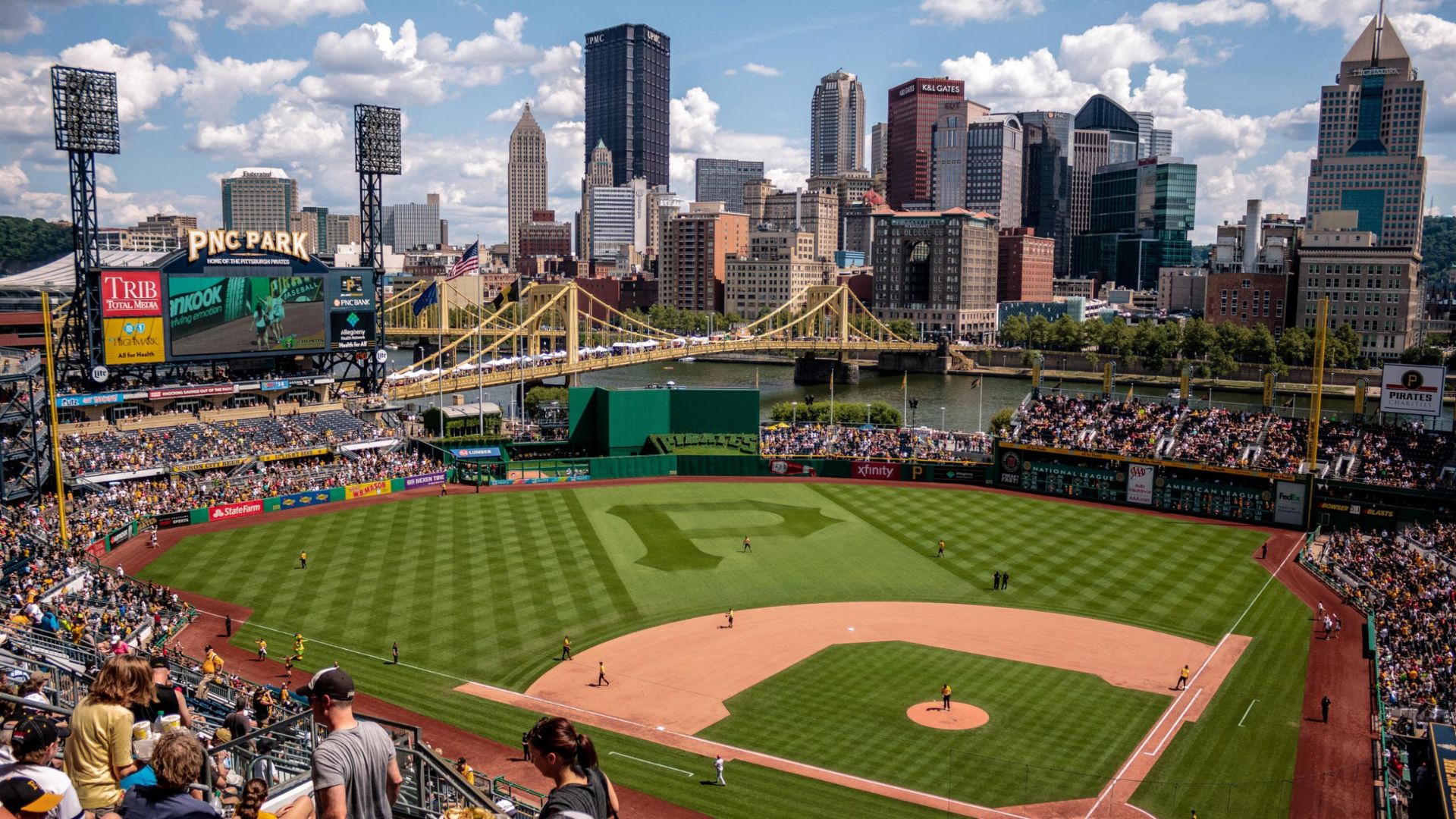
Today, Pittsburgh is preparing to host the 2026 NFL Draft and seeing transformative reinvestment across its waterfront and downtown core, all outcomes that trace back, in part, to having a coherent strategic framework in place.
In Saint John, New Brunswick, where Envision Saint John had merged its tourism and economic development mandates into a single organization, the first test was whether alignment was actually possible. The answer came through the region’s first-ever Tourism Master Plan, built through a 14-member steering committee spanning hospitality, cruise, adventure, aviation, First Nations, and provincial government. What followed was a sequence of engagements – a broader Economic Development Strategy and an Industry and Workforce Analysis – that demonstrated what destination strategy can unlock when it earns genuine cross-sector trust.
The lesson across all three places is the same: good destination research doesn’t validate what a place already believes about itself. It surfaces stronger truths. And stronger truths make for better plans.

What the Strongest Plans Actually Do
The terminology continues to evolve. Tourism Master Plan. Destination Development Plan. Destination Stewardship Plan. Destination Management Plan. The labels differ, but the strongest versions are solving for the same set of challenges.
Implementation planning is where weak plans get exposed. If a recommendation has no owner, no funding pathway, and no political runway, it isn’t a priority. It’s a placeholder. The most important test of any Tourism Master Plan is whether it survives contact with the real world, and whether the organization that commissioned it is equipped to drive it forward.

The Questions Smart Leaders Ask
Before any destination launches a tourism master planning or destination development process, leadership should be clear on a few critical questions.
If those questions are fuzzy, the scope will be fuzzy, too. And fuzzy scopes produce generic plans that may describe a destination’s aspirations, but don’t give anyone a clear path to act on them.
The destinations that commission the best plans don’t arrive with all the answers, but with enough clarity about their constraints, their stakeholders, and their ambitions to make the process genuinely productive and actionable once it’s handed over.
The New Standard: Stewardship With Execution
Tourism master planning started as an effort to expand the DMO’s mandate. It became a framework for stakeholder alignment. It evolved into a tool for destination stewardship. And it is now emerging as the primary instrument through which progressive destination organizations drive economic development, attract investment, and build the supply that meets the demand they want.
That’s a significant evolution in 13 years. And the pace is accelerating, driven in part by a convergence that would have seemed unlikely even a decade ago.

Two Fields That Need to Learn From Each Other
Having spent the better part of 15 years developing both Tourism Master Plans and Economic Development Strategies for cities across the U.S., Canada and Europe, one pattern stands out to me above all others: destination marketers and economic developers are circling the same problem from opposite directions, and neither discipline has fully cracked it alone.
Destination marketers are extraordinarily skilled at building desire for a place – creating the narrative, the imagery, and the emotional pull that moves someone from awareness to arrival. But tourism strategies have historically been vague about the supply side: which specific investments are needed, in what sequence, and what the business case is for each. The result is marketing that generates demand for a destination experience that hasn’t been fully built yet, or that concentrates visitation in places already at capacity.
Economic developers, on the other hand, are rigorous about investment. They know how to make the case for a new corporate headquarters, manufacturing facility or data center. But Economic Development Strategies have historically been weak on storytelling that weaves a collection of investment priorities into a unifying vision of what the place is becoming, or why anyone should want to visit, live, or work there. The result is a portfolio of projects that adds up to less than the sum of its parts.
Destination marketers need to think more like economic developers. Economic developers need to think more like destination marketers. The best destination development strategies do both.
The most effective Tourism Master Plans that Resonance has built in recent years sit squarely at this intersection. They are specific about investment – naming the product gaps, the infrastructure deficits, the experience categories that need capital to reach their potential – while simultaneously building the overarching story of place that makes those investments legible and compelling to the audiences that fund them.
When a destination can tell a developer exactly what kind of hotel the market needs and why, in the context of a broader vision that makes the investment make sense, things move. When an economic development organization can make the case for an arts district or a waterfront activation not just as a community amenity but as a driver of talent attraction and property values, it changes the conversation at the city council table.
This convergence is not just a theoretical proposition, but increasingly the operating reality for the most progressive destination organizations. And the ones that figure it out are building visitor economies that are more resilient, more equitable, and harder for competitors to replicate.
The destinations that will outperform over the next decade are not the ones with the biggest marketing budgets (although budget certainly helps). They are the ones with the clearest strategy, the strongest operating alignment, and the discipline to match visitor growth with community benefit, infrastructure readiness, and a coherent, shareable story of place.
In 2026, the real question is no longer whether your destination needs a Tourism Master Plan or Destination Development Strategy. It’s whether you’re comfortable letting the future of your visitor economy be shaped without one.
If your organization is thinking about its future and the role a Tourism Master Plan or Destination Development Strategy could play in helping you realize your goals and objectives, we’d love to chat: cfair@resonanceco.com.
Similar Articles