Europe’s Best Cities have a story to tell. Are we listening?
05 May 2025
by Chris Fair, President & CEO, Resonance

07 March 2026
by Jeremie Feinblatt, Principal, Resonance Consultancy
Europe has never been more coveted as a place to live, work, invest, and visit. It has also never been more important for city leaders to understand the difference between building a great city and being recognized as one.
Right now, across the continent’s Top 100 cities, those two things are diverging – and the cities that close that gap fastest will define the next decade of European urban competitiveness.
Resonance’s fourth annual Europe’s Best Cities report documents this divergence with obsessive precision. Across the Top 100 European metropolitan areas – each with a population over 500,000, evaluated on 47 metrics spanning 33 subcategories – we found a gap between how cities perform and how they are perceived (a correlation of just 0.54 between the two). In strategic terms, that’s a market inefficiency. And market inefficiencies can be closed.
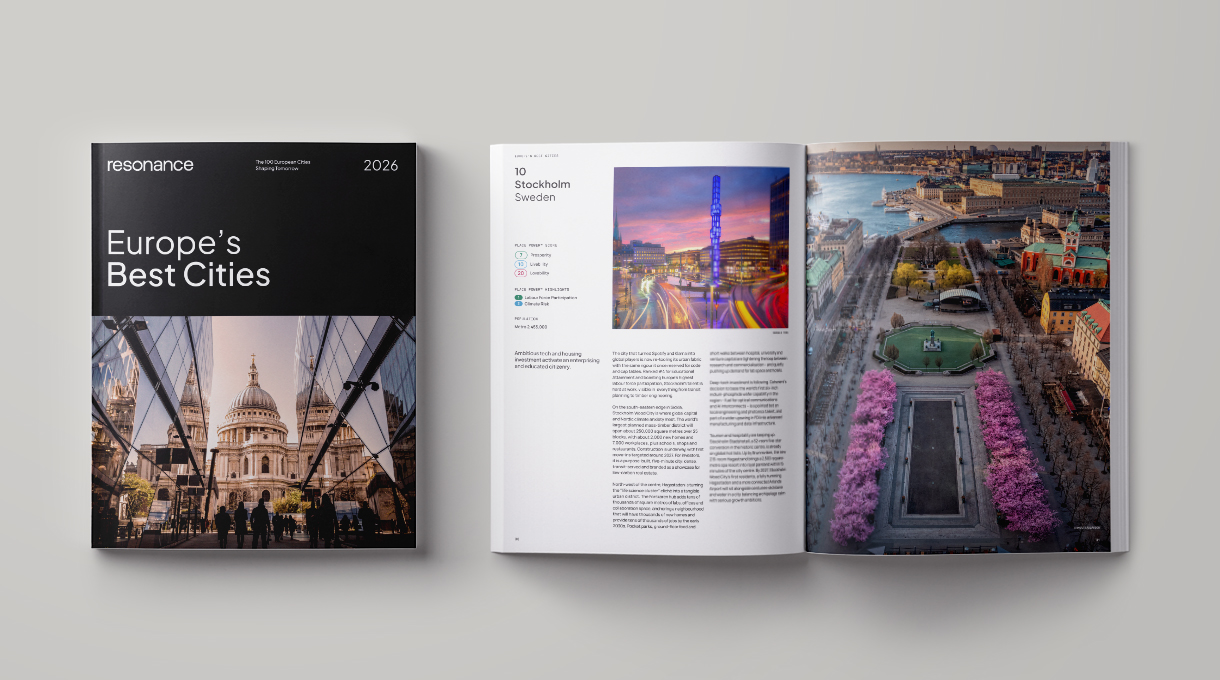
The 2026 Europe’s Best Cities report
Europe Is Carrying More Weight Than It Used To
Before getting into what cities can do about this, it’s worth being clear about the context they’re operating in.
Geopolitical realignment is reshaping supply chains, investment flows, and defense commitments. As transatlantic relationships grow more complicated, European cities are becoming more central – not just as tourism destinations, but as nodes of resilience, economic capacity, and institutional credibility. Cities are increasingly doing work that used to be distributed more broadly across national governments and global institutions.
That shift shows up in visitor-facing ways, too. Rail connectivity is expanding and anchor events like the Milano–Cortina 2026 Winter Games and the European Capitals of Culture in Oulu and Trenčín are generating real attention and arrivals. New EU border technologies like the Entry/Exit System and ETIAS are changing the experience at the frontier in ways cities will need to manage and, ideally, turn into an asset.
What’s less often noted is how Europeans themselves are now the primary engine of the continent’s record tourism growth. Domestic and intra-European travel is no longer a fallback, but the foundation.
The Core Finding: Cities That Perform Well Don’t Automatically Get Credit For It
The 0.54 correlation gap tells you something important: that roughly half of what determines how a city is perceived has little to do with how it actually functions day to day.
Some cities benefit from reputations that outrun their current reality, drawing visitors, investment, and talent on inherited narrative capital while basic systems quietly fall behind. Others have transformed their lived experience in measurable ways but remain invisible to the investors and employers who could accelerate that momentum.
Both situations are costly. The first is fragile. The second is a waste.
The cities climbing fastest in our 2026 rankings are treating this gap as a management problem, not a marketing problem. And that distinction matters.
Marketing can amplify a story, but it cannot manufacture one. What these cities are doing differently is investing simultaneously in the hardware – the infrastructure, public space, mobility, and climate resilience that shapes lived experience – and the narrative capacity to make those investments legible to people outside the city who are deciding where to go, live, build, or invest.

Paris
Paris: What “Hardware + Narrative” Actually Looks Like in Practice
Since 2020, Paris has added 250 acres of pedestrian space, with another 2030 planned by 2030. It has built almost 625 miles of dedicated cycling infrastructure, with cycling rates nearly doubling in two years.
A city-wide 19 mph speed limit is now unremarkable, absorbed into daily life. The first stage of the Grand Paris Express opened in mid-2024, expanding access and mobility at metropolitan scale.
None of this is abstract. These are changes that residents feel, visitors notice, and journalists can measure and verify. That verifiability is the point. Cities that want to change perception need to make their improvements easy to see, describe, and share. Paris has done that systematically.
The lesson for other cities is not “replicate Paris.” It’s, build things that can be counted, then count them publicly.
The Europe’s Best Cities Methodology
Place Power™ is built from three pillars, and the interaction between them is where the real insight lives.
Livability covers the natural and built environment: green space, air quality, access to daily needs, healthcare, and the socioeconomic conditions that determine who can actually afford to be there.
Lovability captures experiential appeal – culture, dining, nightlife – but also the digital engagement signals that now shape how places are discovered and remembered. Our 2026 methodology expands social listening to include TikTok and Reddit alongside Instagram, reflecting where real discovery conversations are actually happening.
Prosperity examines the fundamentals that support economic vitality: labor force participation, educational attainment, airport connectivity, and convention infrastructure.
On the perception side, Ipsos surveyed 5,000 respondents across 10 European countries using open-ended questions, not prompted rankings. That design matters. When you ask people what’s top of mind rather than forcing a choice from a list, you learn which cities have genuinely earned their reputation, and which ones are present in the conversation by default.
This year’s methodology also explicitly incorporates resilience measures like climate risk exposure and adaptive capacity alongside public transportation accessibility. These additional metrics are central to how cities will compete in the decade ahead.
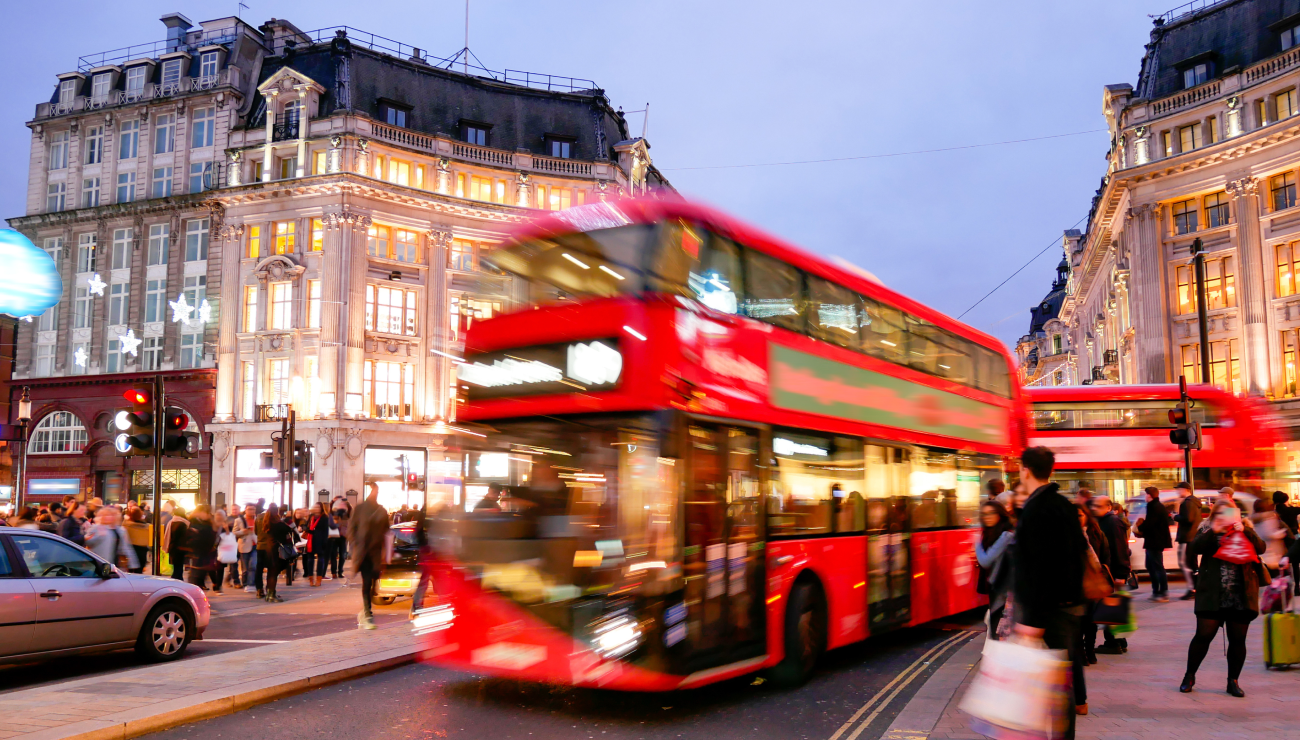
London
The 2026 Top 10: Familiar Names, Instructive Differences
London, Paris, and Berlin hold the top three spots, followed by Rome, Barcelona, Madrid, Amsterdam, Vienna, Copenhagen, and Stockholm.
The composition isn’t entirely surprising, but what’s instructive is the why behind the consistency of this Top 10 over four years of the ranking.
London ranks first overall. In 2024, international traveler spending reached nearly $21.9 billion, up from $17.2 billion the year before. Heathrow exceeded pre-pandemic passenger levels, and Gatwick completed a $317 million terminal upgrade. A planned tourist tax, estimated to generate $317 million annually, signals a city actively reinvesting in the systems that sustain its appeal rather than treating inbound demand as passive income.
Cities at the top stay there through deliberate reinvestment, even if it’s nowhere near the scale of London’s, because global (or even regional) primacy is not automatic.
Berlin illustrates something different and arguably more transferable. The city logged 30.6 million hotel overnight stays in 2024, but our ranking reflects how tightly its cultural appeal has been connected to economic capacity.
Berlin is now Germany’s innovation engine, with more than 4,800 active start-ups, 27 unicorns, and ecosystem growth exceeding 20% in 2025. The lesson of the German capital is the one most relevant to second cities with strong cultural identities: culture opens the door. Economic infrastructure determines how wide it swings and for how long.
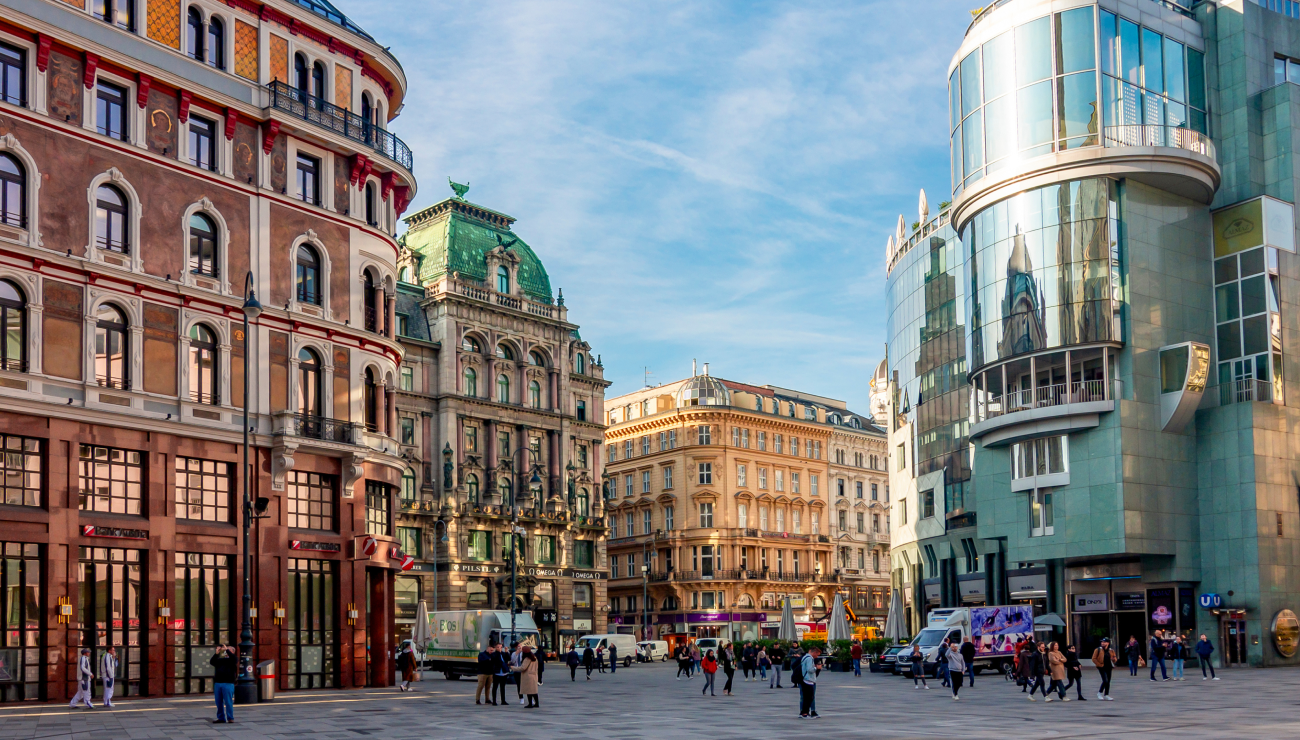
Vienna
Four Moves for Cities Serious About Closing the Gap
The report is a diagnostic. What follows is what to do with it.
Audit your gap before you address it. Where do you outperform your reputation? Where are you coasting on narrative capital while systems quietly deteriorate? The 0.54 correlation means quantifying your own performance-perception gap is a top priority, because cities that know where their gap is widest can move fastest to close it.
Choose proof points you can actually defend. Skip the vanity metrics and focus on indicators that connect to real decisions: transit accessibility and walkability, housing delivery and affordability trends, air quality and business ecosystem health. If you can’t verify it and show the trend line, it’s not a defensible proof point.
Treat earned media as a system, not a windfall. Third-party validation is the fastest way to turn credible proof into belief. Not because journalists, media outlets and trusted influencers are advocates, but because data-backed stories from credible external sources reach audiences that city and destination communications rarely do on their own. Give journalists fresh, specific, verifiable information. Package your investments as stories that outsiders can understand without a briefing. A practical test: if your city claims improved livability, what two or three metrics changed in the last 24 months? Can you show and demonstrate them quickly and clearly?
Align product, policy, and promotion, or the gaps will be obvious. Many cities are now piloting visitor management measures and sustainability standards in response to overcrowding and resident pressure. Those responses are reasonable, but they need to be integrated with the city’s broader growth and marketing strategy, not managed in parallel. Marketing that promises what the city cannot yet deliver erodes exactly the trust it’s trying to build.
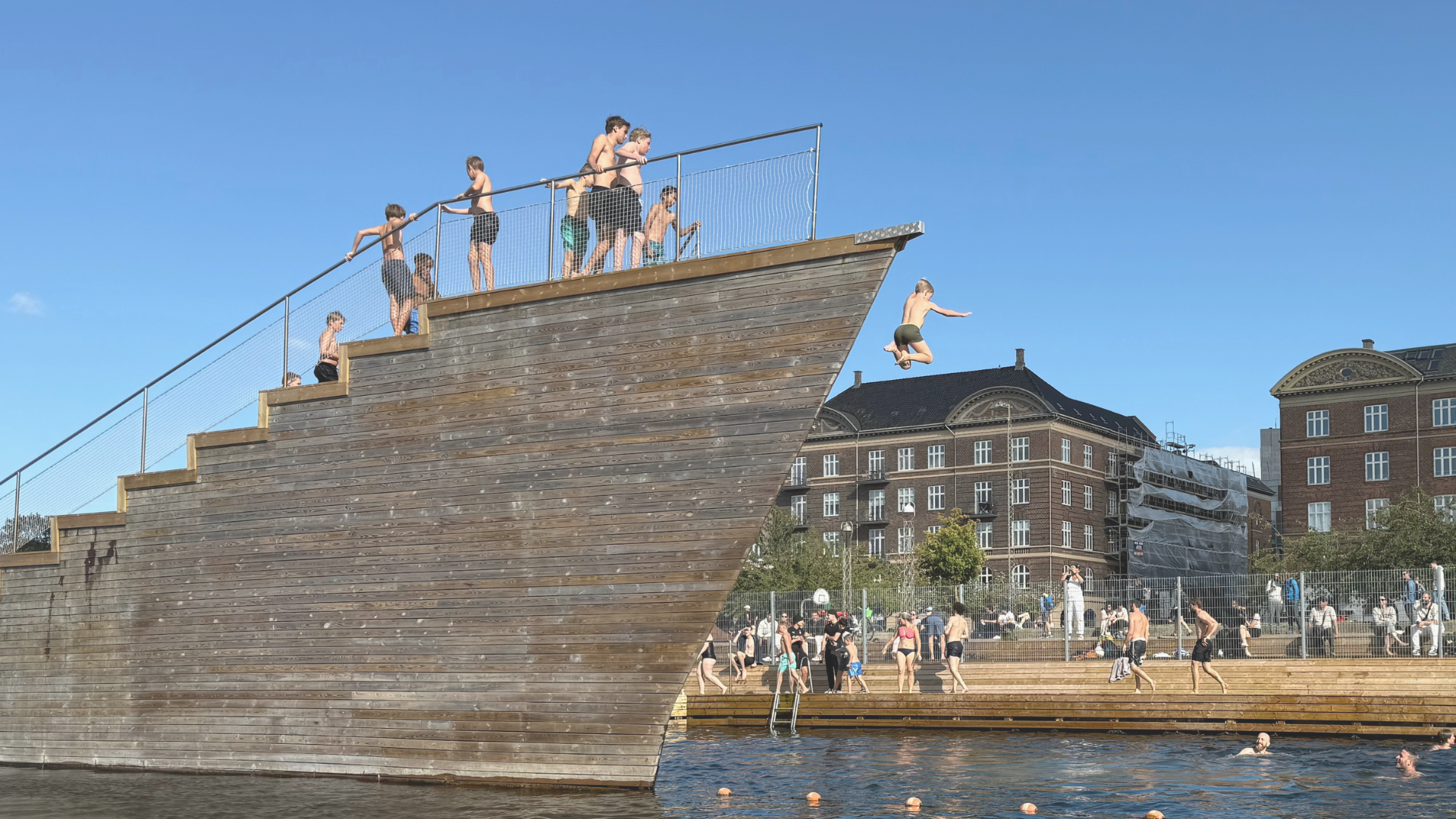
Copenhagen
The Tension This Report Maps – But Doesn’t Pretend to Resolve
Europe’s cities are balancing visitor growth against resident wellbeing, economic ambition against affordability, cultural appeal against the cost of living for the people who create it.
There is no formula that resolves those tensions neatly. What the best performers share is an explicit acknowledgment that these are tensions to be managed, not contradictions to be wished away through branding. A governance approach that forces those tradeoffs into the open rather than letting them accumulate as quiet grievances is vital.
A place that optimizes only for visitors will eventually lose the residents who make it worth visiting. A city that optimizes only for resident satisfaction risks becoming invisible to the employers and investors its residents need. A destination that optimizes only for growth can hollow out the culture that made it attractive in the first place.
Our Place Power™ score doesn’t resolve this. It maps it for cities, which is the necessary first step.
Where to Go From Here
Download the 2026 Europe’s Best Cities report, featuring individual profiles and performance breakdowns for all 100 metropolitan areas.
If you steward a city, region, or destination and want to think through what the performance-perception gap means for your specific context – and what a practical strategy for closing it looks like – we’d love to talk.
Similar Articles