The 10 keys to the prosperity of U.S. cities now
Insights — 10 April 2024
by Chris Fair, President & CEO, Resonance

Insights — 10 September 2025
by Chris Fair, Resonance President & CEO
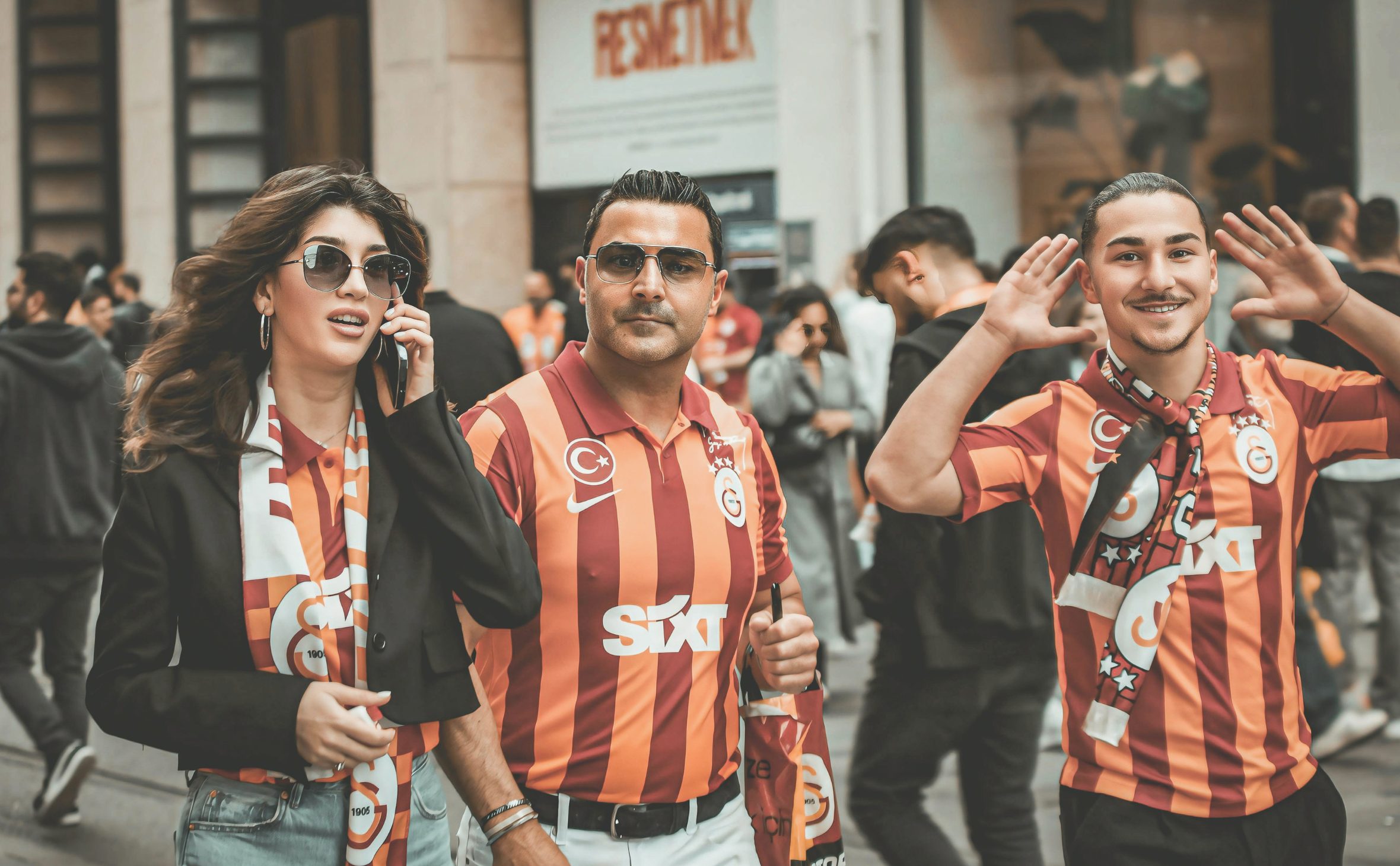
This year it’s not just the kids going back Monday to Friday, but many workers as well as large corporations and governments have been rolling out, or increasing, return-to-office policies. But total footfall in many cities is still well below 2019 numbers, shaped by a workweek that peaks mid‑week and softens at the margins.
While the commercial real estate market is recovering, particularly for Class-A space, and we’ve begun to see an uptick in office demand, it seems unlikely that we’ll return to pre-pandemic levels of attendance, visitation and expenditure in most city centers for some time to come.
Five years on, it’s time to start looking forward, not back, and reframe our city centers as places to not just work, but to live and play. Patterns and models for living and working in cities are well-established, although the level of livability from one city to the next varies widely. What almost all cities have failed to do well is the “play” part.
Our work in Saudi Arabia on the positioning of Qiddiya as an entire city dedicated to play pushes this idea to an extreme, but it is also instructive. If our cities are less about work, why shouldn’t they be more fun?
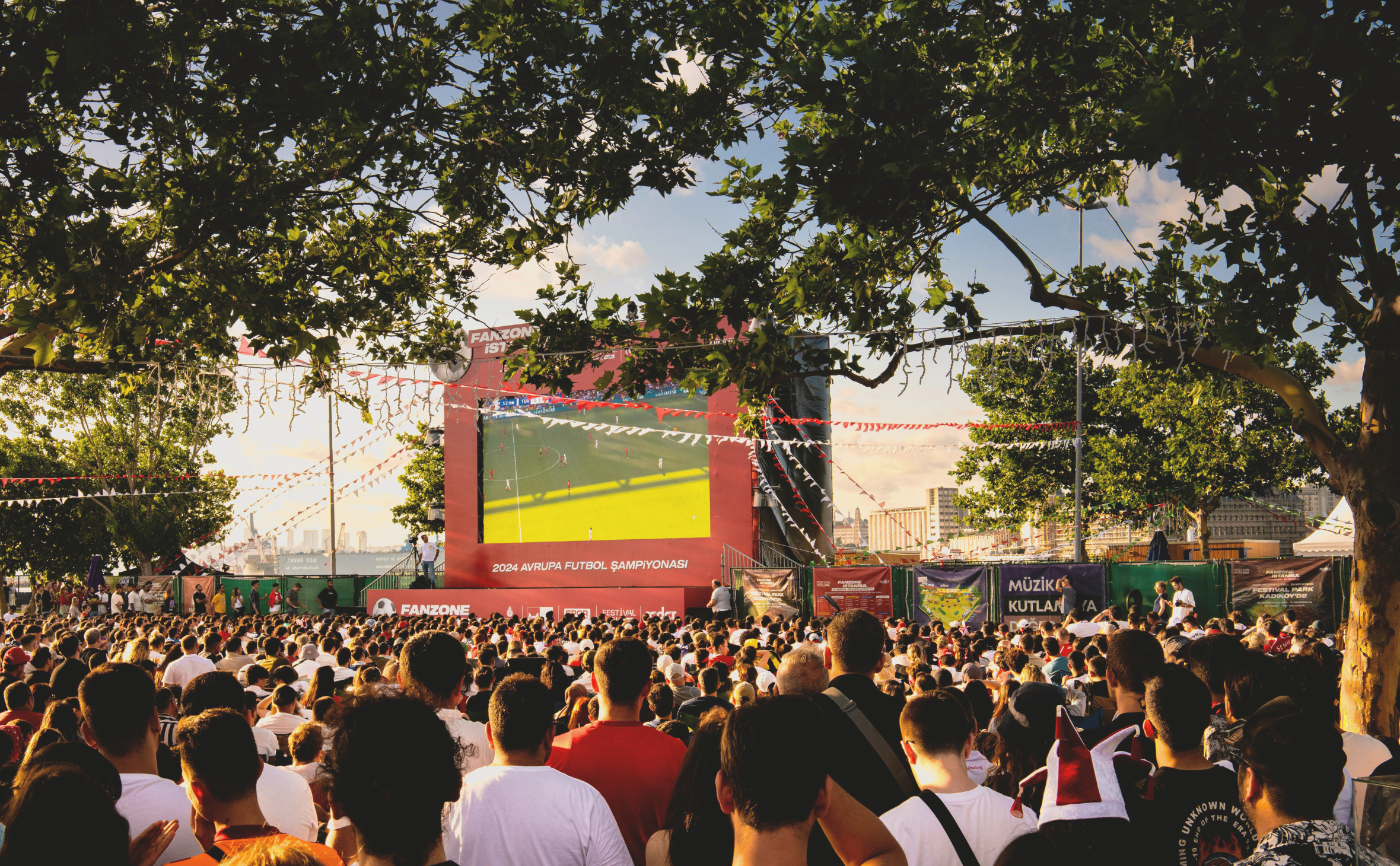
Play can take many forms and one of the most obvious is sports. Live, shared experiences are among the last surefire crowd magnets in our individualistic, digital reality. But decades of research show stadiums rarely produce broad-based economic uplift and the benefits of public subsidies for sports arenas and stadiums have long been derided by economists.
Their myriad studies indicate there is little net new local economic activity and more often just a shift in expenditure that would have occurred in the city anyway. That’s likely true when stadiums or arenas are conceived as isolated islands surrounded by acres of parking – often in a suburban setting disconnected from transit – as they often were in the past. The opportunity now is to rethink the role of these facilities as catalysts for not only surrounding development, but retention of expenditure that might now leave the city all together in our new hybrid reality.
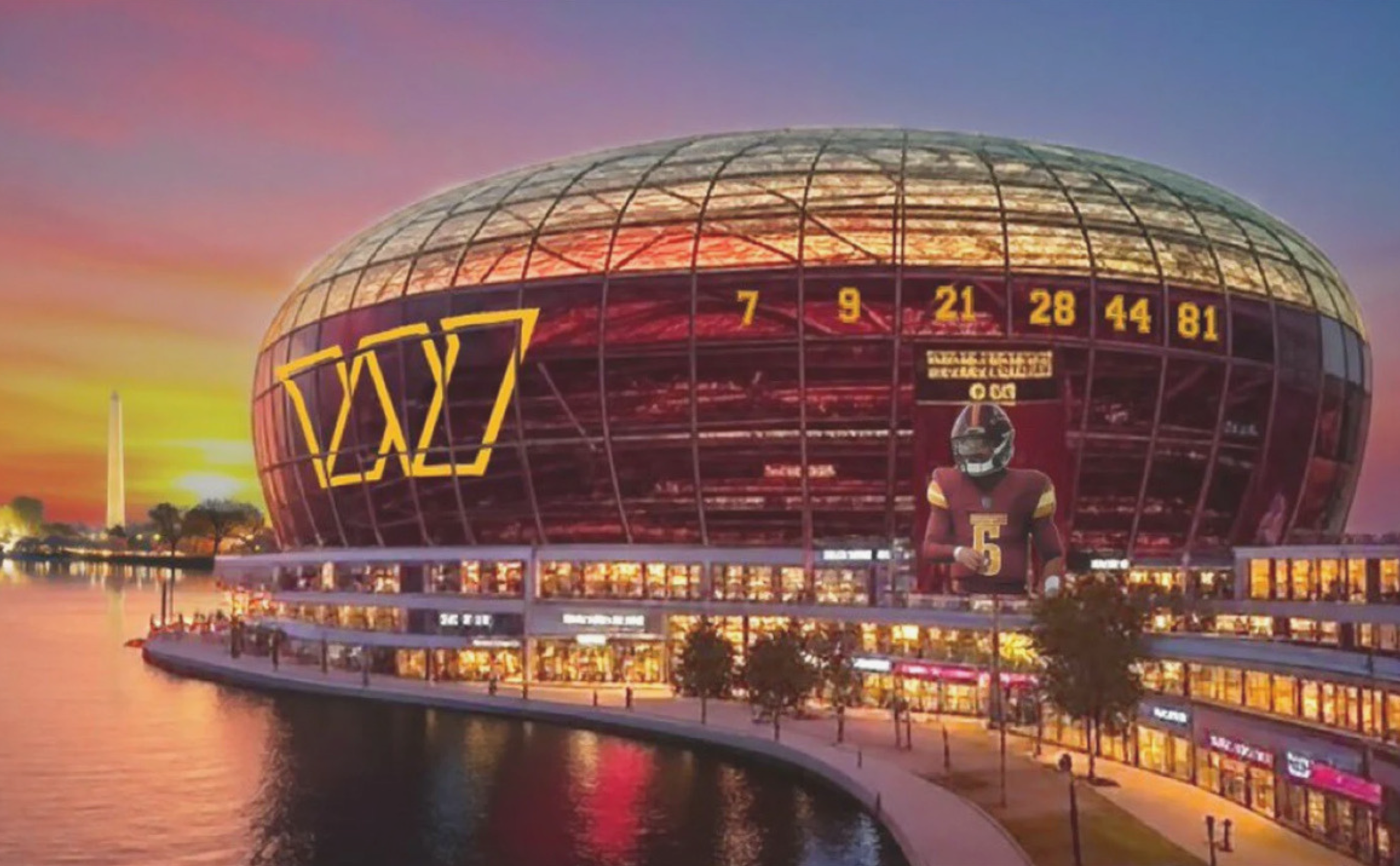
A rendition of Washington, D.C.’s RFK campus.
Across North America, proposals and funding for sports-anchored mixed-use districts are multiplying. Washington, D.C.’s return of NFL football to the RFK campus is a $3.7 to $3.8B test case: a 65,000-seat stadium within a 170– to 180-acre redevelopment that also promises 5,000–6,000 homes (30% affordable) and over $1B in public funding for site prep and infrastructure.
D.C. is not alone. Nashville is building a $2.1–$2.2B enclosed stadium for the Titans as the anchor to an East Bank district. Las Vegas is proceeding with a $1.7–$2B ballpark for the Athletics with an adjacent resort concept.
In Atlanta, Centennial Yards is a multibillion‑dollar redevelopment of “the Gulch,” a 50‑acre void of rail lines and parking lots between State Farm Arena, Mercedes‑Benz Stadium, and South Downtown. The plan calls for up to 12 million sq ft of housing, hotels, offices, retail and entertainment venues that will connect these facilities and downtown together to create a vibrant new district in the city.
In Canada, city‑building through arenas is also accelerating. Our work with the Calgary Municipal Land Corporation over the last decade to create an entire new Culture + Entertainment District is now being realized with a new event centre (Scotia Place) under construction. And in Ottawa, the NHL’s Senators and the National Capital Commission finalized the LeBreton Flats land deal last month, advancing a new downtown arena and entertainment district that will shift activity from suburban Kanata back toward the core.
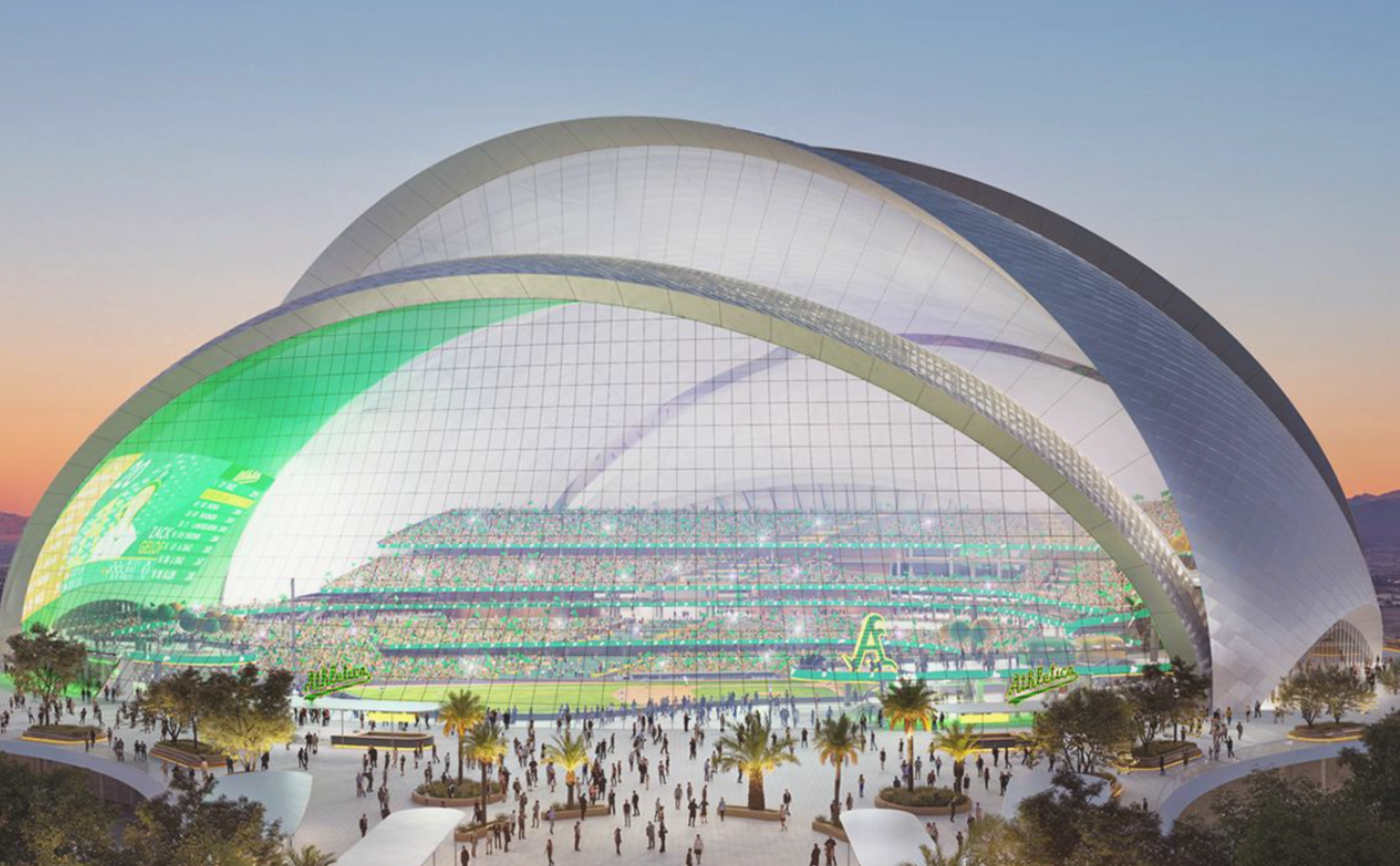
Las Vegas is proceeding with a $1.7–$2B ballpark for the Athletics with an adjacent resort concept.
But the built environment alone does not a city make. The development of The Banks in Cincinnati with its NFL Stadium and MLB Park a short walk from the city center also delivered riverfront parks, housing and a major music venue, but is an unfortunate example of how we can get the buildings right, and the place wrong. A long list of structural and governance issues has left nine acres of prime land between the ballpark and the stadium either vacant or stuck in process 25 years later. A new master planning initiative is trying to unravel all that.
The key to creating a successful sports and entertainment district is to not just handle large-scale events, but to plan and program them for the many non-event days throughout the year. The big game days should be the icing on the cake, not the cake itself.
Here’s our 10-point plan for a perfect sports and entertainment district today:
1) Program for 365 days, not just game days
Pair the venue with year‑round programming infrastructure (think a ticketed concert hall or live stage and a programmable public plaza) so there’s something to do most nights of the week and in every season.
2) Put housing in the development’s first phases
Residents are the difference between a neighborhood and an “event park.” Delivering apartments early stabilizes street life and supports retail between events.
3) Add everyday essentials that create “stickiness”
Grocery, fitness, daycare, a food hall, and services lengthen dwell time and convert game‑night visitors into repeat customers.
4) Hard‑wire transit and walkability into the plan
Direct station connections, safe crossings, and a coherent pedestrian network expand catchment and reduce the dead space of gameday parking.
5) Create multi‑venue synergy (large, mid and small)
A stadium/arena should sit within a cluster: a concert venue, cinema, comedy club, and flexible plaza. This smooths the calendar and diversifies audiences.
6) Build the governance and operating model up front
Districts that hum have a single point of accountability for security, cleaning, marketing, and programming – often via a BID/CID or team‑led entity – plus a transparent public‑private finance stack.
7) Right‑size parking and curb to support people, not cars
Use structured/shared parking, dynamic curb management, and demand‑based pricing; design tailgating to be seasonal/managed, not the district’s default land use.
8) Design a signature public gathering place with a daily identity
Think “streets and squares” first: shade, wind breaks, lighting, seating, restrooms, and wayfinding. A plaza that’s around 40,000 sq ft in size comfortably hosts watch parties and festivals without feeling empty on weekdays.
9) Bake in community benefits and acoustics early
Codify local hiring, small‑business space, and affordability… and engineer for noise. Madrid’s Bernabéu renovation shows how concert ambitions must be matched by sound mitigation and community protocols.
10) Phase for momentum (and credibility)
Open with an anchor that changes behavior (like a mid‑size music venue or food hall), plus 300–600 homes and two blocks of active retail. Add office/hotel once the evening/weekend pattern is proven.
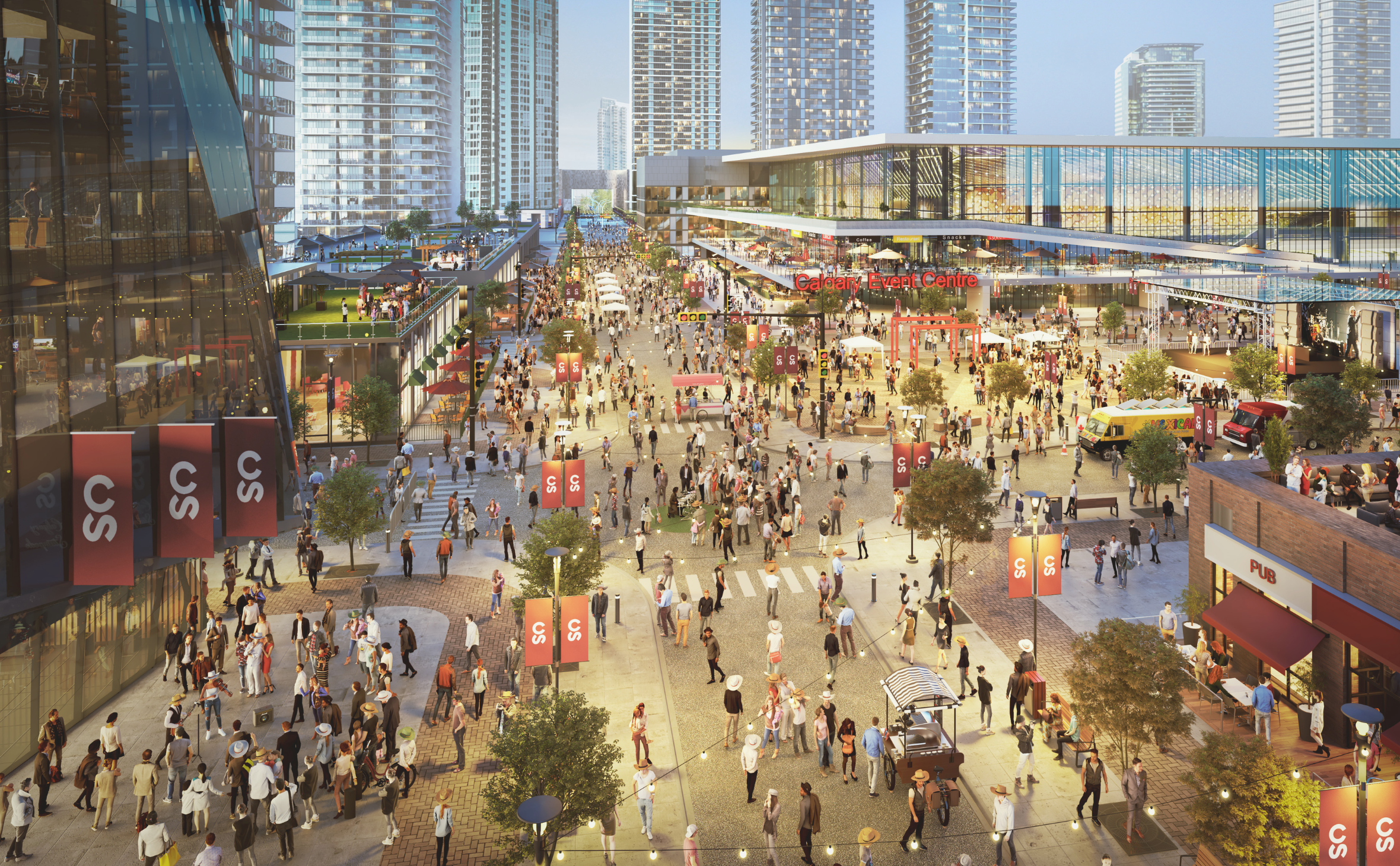
Resonance worked with the Calgary Municipal Land Corporation to create an entire new Culture + Entertainment District in the city.
Stadiums can help cities snap out of a potential downtown doom loop, but only if they are instruments of placemaking, not the point of it. The project that wins is the one that delivers homes, daily life, local business growth and cultural participation. And proves it, quarter after quarter.
And if a stadium district isn’t the right fit? The same framework can be used for other catalysts such as cultural institutions, entertainment districts and waterfront revitalizations. In every case, it’s about approaching the city as a multi-dimensional place to live, work and play.
It’s something said often, but rarely delivered well. So play on… and contact me to talk through ideas you may have for your destination.